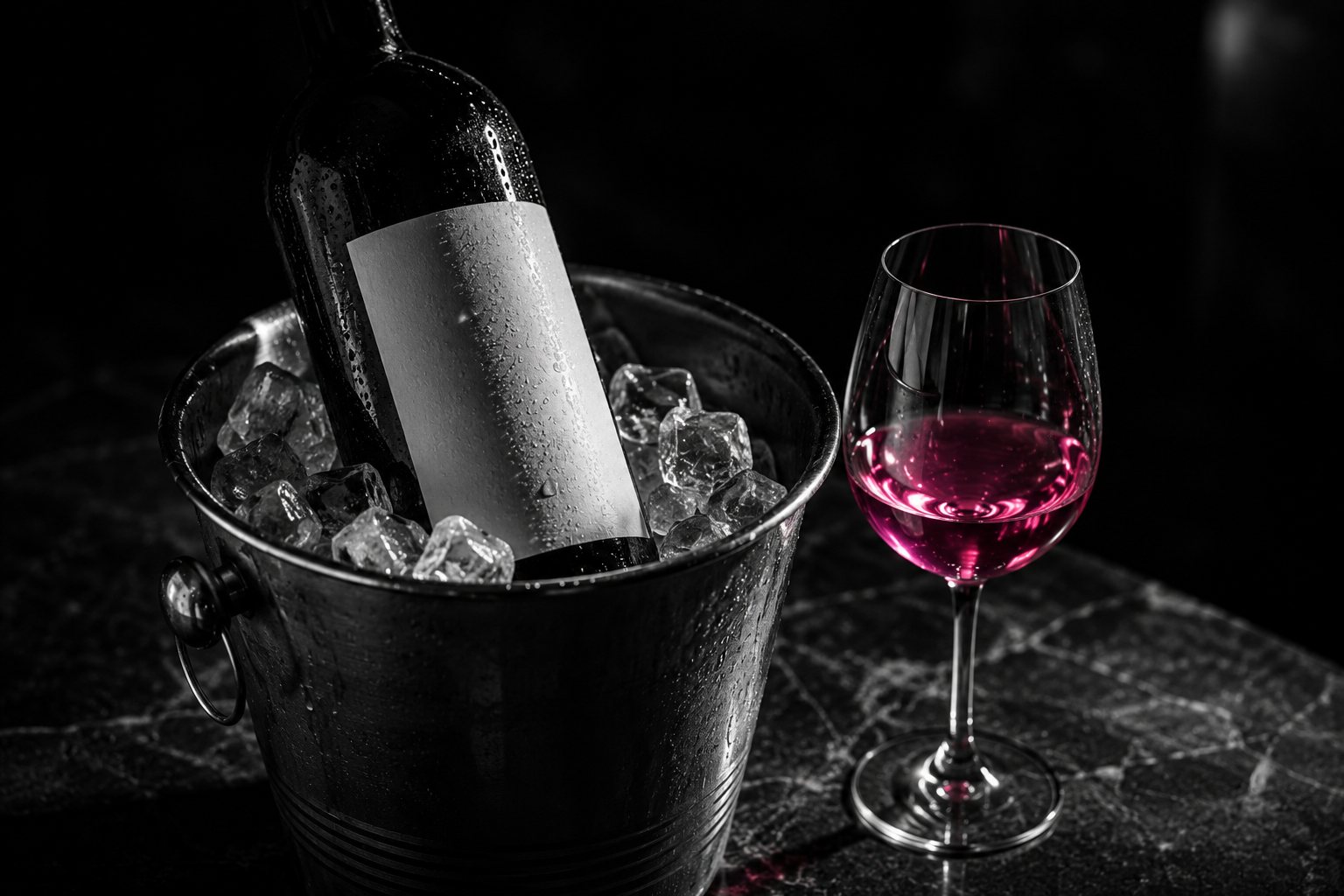
Wine in the glass,
a question on your mind?
Ask the VinoSomm sommelier - about any wine, anytime.
As a rule of thumb: sparkling wine and rosé 6–8 °C (43–46 °F), light white wines 8–10 °C (46–50 °F), full-bodied whites 10–12 °C (50–54 °F), light reds 12–14 °C (54–57 °F), and full-bodied reds 16–18 °C (61–64 °F). Too cold and a wine seems closed, too warm and it turns clumsy and alcoholic. A red that's been sitting at room temperature is better off spending 20 minutes in the fridge.
| Wine type | Temperature |
|---|---|
| Sparkling wine (Sekt, Champagne, Prosecco) | 6–8 °C (43–46 °F) |
| Rosé | 6–8 °C (43–46 °F) |
| Light white wine (Riesling, Pinot Grigio) | 8–10 °C (46–50 °F) |
| Full-bodied white wine (Chardonnay, Pinot Gris) | 10–12 °C (50–54 °F) |
| Light red wine (Pinot Noir, Beaujolais) | 12–14 °C (54–57 °F) |
| Full-bodied red wine (Bordeaux, Barolo, Syrah) | 16–18 °C (61–64 °F) |
Temperature controls which aromas a wine shows. Too cold numbs the fruit and makes a wine seem thin and closed. Too warm pushes the alcohol forward, and the wine feels broad and clumsy. In the right window, though, a wine comes into balance. Fruit, acidity, and structure line up.
Ask the VinoSomm sommelier - about any wine, anytime.