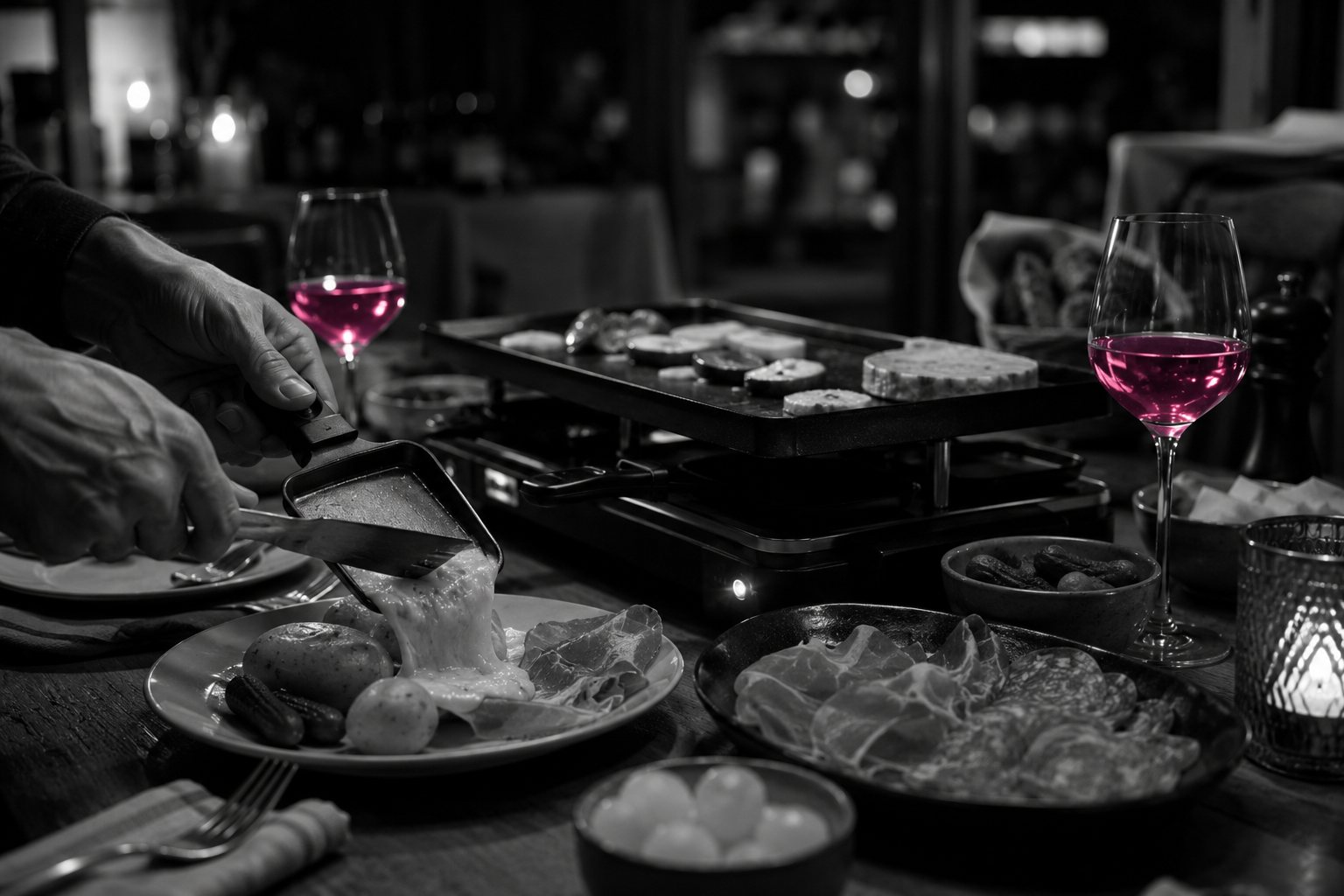
Raclette next?
Just ask VinoSomm.
A photo of the list, and you've got the right bottle.
Short version: your best bets are a dry Riesling or a Grüner Veltliner. Both have enough acidity to balance the melted, fatty cheese and keep your palate fresh between bites. If you'd rather drink red, reach for a light, cool-served Pinot Noir. Bold, tannic reds, on the other hand, are a poor match.
Raclette is a challenge for the glass: lots of melted cheese, salty, fatty, plus potatoes and often bacon. What this combination needs is a counterpart that cleans up rather than piles on. That's exactly what acidity does. It cuts through the fat, wakes up the palate, and makes sure the tenth bite tastes as good as the first.
A soft, heavy red with lots of tannin does the opposite: tannin and cheese fat amplify each other into a furry, bitter impression. That's why so many classic cheese-and-red-wine pairings feel surprisingly heavy with raclette.
It doesn't have to be white, but the rule is simple: light, fruity, low tannin, served on the cooler side (14–16 °C (57–61 °F)). A young Pinot Noir from Burgundy or Alsace works well, as does a light Beaujolais. Steer clear of big, oaky reds. They lose to the cheese.
These recommendations are a good starting point. But which wine ends up being right for you depends on your taste, and on whatever is actually on the shelf or the list in front of you. That's exactly what VinoSomm is for: snap a photo of your wine list or a bottle, and the app shows you the wine that fits you and your meal.
Behind it is your personal taste profile: VinoSomm learns from every rating how you like acidity, fruit, and body, and turns that into a match score of its own for every bottle. So the recommendations here are the starting point. Which Riesling or Pinot Noir wins your raclette night is up to your profile.
A photo of the list, and you've got the right bottle.