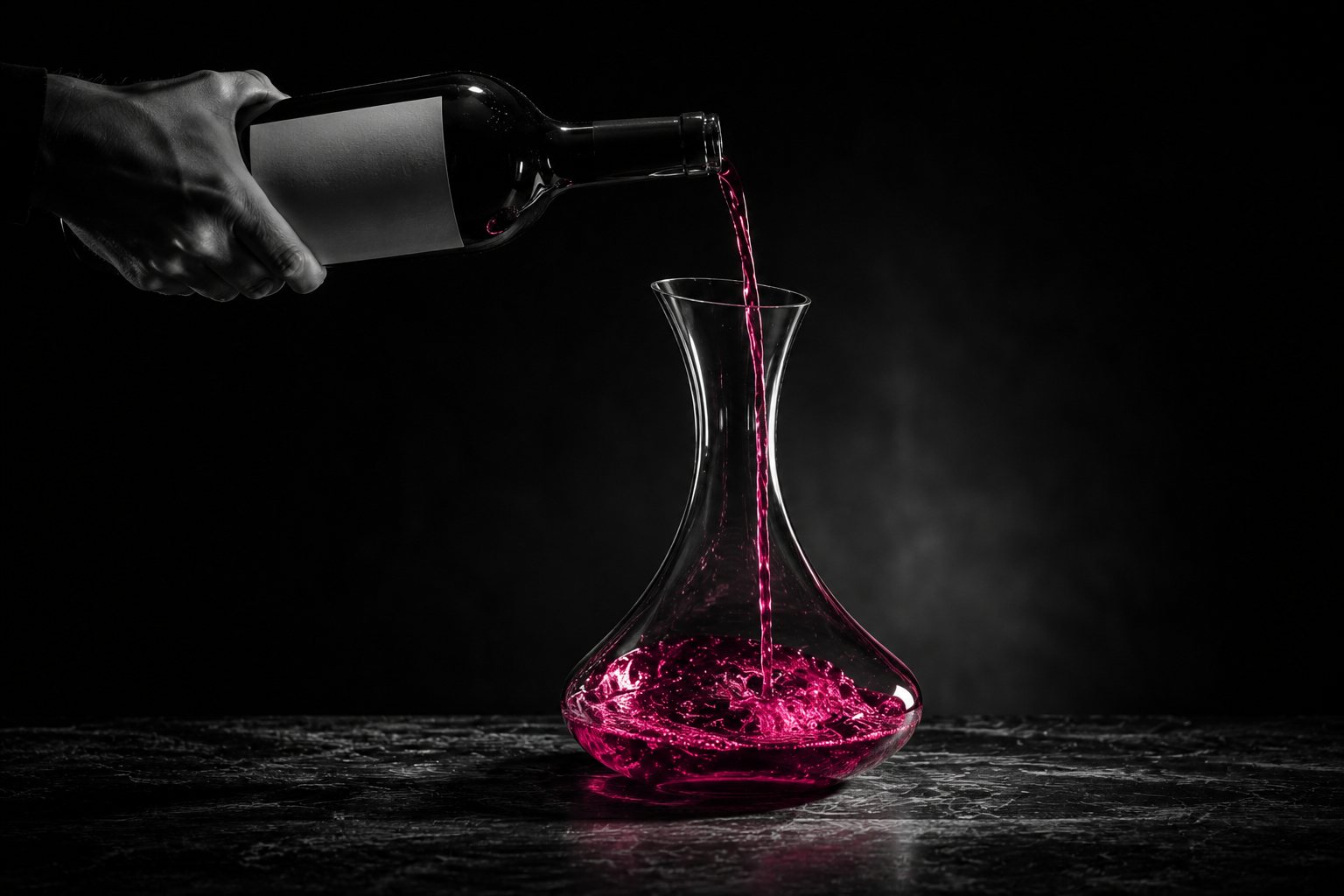
Open it or let it breathe?
VinoSomm knows.
Scan the bottle and ask your sommelier.
Decanting pays off above all with young, powerful red wines: contact with air softens them and opens up the aromas. With old reds, it's about separating the wine from the sediment, so pour carefully and briefly here. Many everyday wines need no decanter at all: open the bottle, wait ten minutes, done.
When wine meets oxygen, two things happen: volatile, sometimes slightly musty notes blow off, and the aromas unfold. With young, tannic reds, oxygen also softens the tannins, so the wine feels rounder and more approachable. This is what people call letting it breathe.
Stand the bottle upright a few hours ahead so the sediment settles at the bottom. Then pour the wine slowly and steadily into the decanter. With old wines, hold a light source behind the neck so you can see when the sediment is coming and stop in time. A decanter is nice but not a must: in a pinch, a carafe will do.
Whether your wine needs air depends on vintage, grape, and structure. Scan the bottle with VinoSomm or ask the sommelier chat. It'll tell you whether decanting is worth it and for how long.
Scan the bottle and ask your sommelier.